Note: This article contains affiliate links. If you click on these links and make a purchase, I may earn a small commission at no extra cost to you. This helps support my research and content. Read my full affiliate disclosure here.
If you tow regularly or need a reliable platform for bike racks and cargo carriers, picking the right hitch matters. The Chevrolet Traverse tow hitch receiver you choose affects what you can tow, how it mounts to the vehicle, and how it behaves on the road. This guide lists six shortlisted options that represent the most practical choices for Traverse owners, and explains the factors we used to evaluate them. Expect clear coverage of mounting type, capacity, compatibility with common accessories, and ease of installation. Read on to find the towing approach that best fits your needs.
Looking for other parts? See all Chevrolet Traverse parts & accessories.
Top Picks at a Glance
| Best Reviewed A top-rated pick with lots of positive feedback | AutoBull Class 3 Trailer Hitch Receiver for Chevrolet Traverse (2" Receiver) |  |
| Best Quality Built to a higher standard if you want something more solid | KUAFU Universal RV Trailer 2" Class III Receiver Hitch |  |
| Best Budget The cheapest option that still gets the job done reliably | HECASA Class 3 Trailer Hitch 2-Inch Receiver for Chevy Traverse / Buick Enclave |  |
| Most Sold A high-volume bestseller chosen again and again | maXpeedingrods Class 3 2" Trailer Hitch Receiver |  |
| Best Value for Money The sweet spot between price and what you get | MIKKUPPA Adjustable Trailer Hitch with Dual Ball Mount for 2.5" Receiver |  |
| Best Overall The best all-around choice for most situations | ECOTRIC Class 4 Trailer Hitch 2" Receiver for Chevrolet Traverse |  |
1. AutoBull Class 3 Trailer Hitch Receiver for Chevrolet Traverse (2" Receiver)

| Fitment | 2009–2017 Chevrolet Traverse, select GM SUVs |
|---|---|
| Receiver Size | 2" x 2" |
| Maximum Towing Capacity | 6500 Pounds |
| Material | Alloy carbon steel |
| Finish Type | Black powder coated |
This AutoBull Class 3 hitch converts a Traverse into a capable towing vehicle with a standard 2-inch by 2-inch receiver that accepts ball mounts, bike racks, cargo carriers, and other common towing accessories. It is a vehicle-specific, bolt-on design that uses pre-drilled mounting points and included hardware so most installations are straightforward and do not require drilling. Constructed from alloy carbon steel with a black powder-coated finish and anti-corrosion plating, the hitch is intended to resist rust and everyday wear from road use. The 6,500 pound maximum towing capacity covers most recreational trailers, small boats, and heavy cargo within class limits. The kit also includes a hinged dust cover to keep the receiver clean when not in use. Limitations are typical of a bolt-on aftermarket hitch: you must observe the vehicle's gross towing and tongue weight limits and some owners may prefer professional installation to ensure torque specs and wiring are handled correctly.
Best for: Reliability-focused buyers who prioritize a durable, vehicle-specific towing solution that installs cleanly and performs consistently for regular recreational towing and hauling.
Less Ideal for: Drivers seeking the highest towing capacities or commercial-grade hitches should consider heavier-duty alternatives or a professional tow package upgrade from the dealer.
- Vehicle-specific fit for 2009–2017 Chevrolet Traverse and related models for a clean, factory-like installation
- Standard 2" x 2" Class 3 receiver compatible with common towing accessories
- Rated up to 6,500 lb, suitable for small trailers, boats, and heavy cargo within class limits
- Powder-coated alloy carbon steel with anti-corrosion plating for improved rust resistance
- Includes hardware and hinged dust cover to simplify installation and protect the receiver when not in use
- Requires attention to the vehicle's official towing and tongue weight limits rather than increasing vehicle capability
- Some buyers may prefer professional installation to ensure correct torque and wiring connections
Verdict A solid, vehicle-specific Class 3 hitch that gives Chevrolet Traverse owners a reliable, easy-to-install 2" receiver and a 6,500 lb towing rating.
2. KUAFU Universal RV Trailer 2" Class III Receiver Hitch
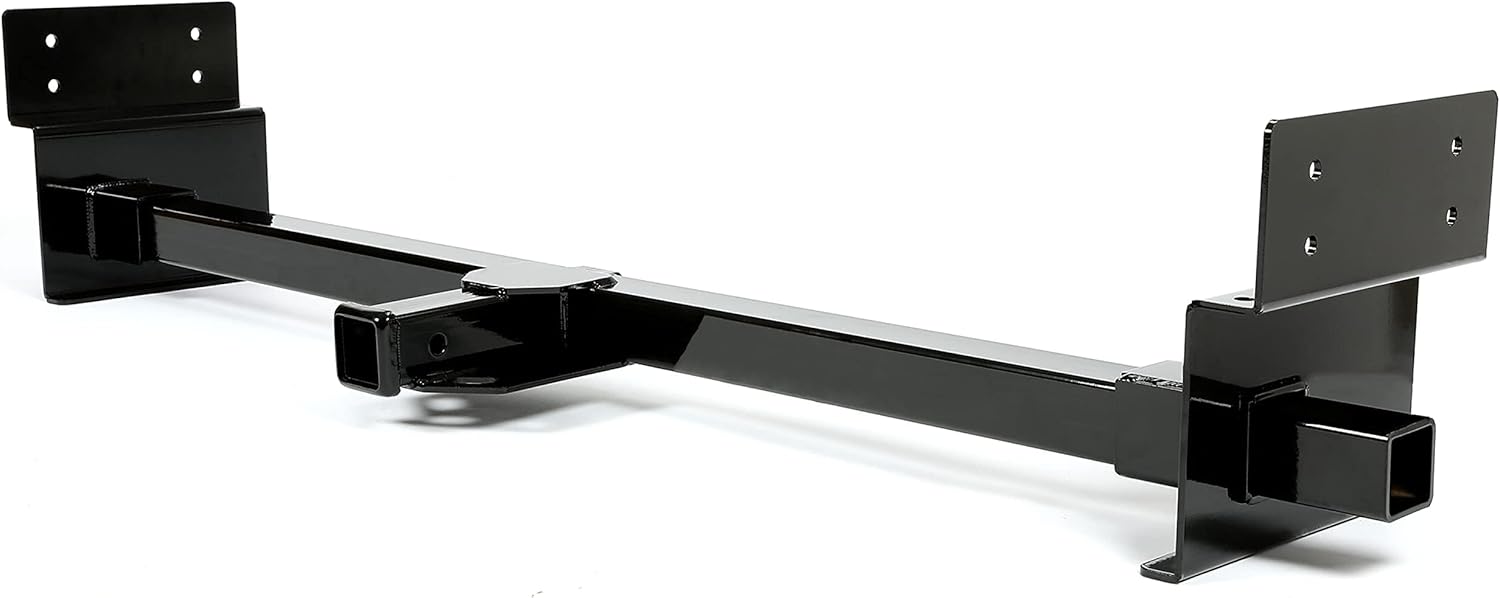
| Maximum Towing Capacity | 3500 Pounds |
|---|---|
| Tongue Weight | 350 Pounds |
| Finish Type | Powder Coated |
| Automotive Fit Type | Universal Fit |
This KUAFU Universal RV receiver is a beefy, steel Class III style hitch designed to carry up to 3,500 pounds gross trailer weight with a 350 lb tongue load. It installs as a frame-mounted receiver intended for wide 72 inch frames and is typically welded or bolted to the vehicle frame when used on trailers or RVs. The powder coat finish helps resist corrosion and the package includes the crossmember and brackets needed for installation. In real-world use the unit provides a stable platform for cargo carriers, e-bike racks, small trailers and light towing, and several owners report long trips and heavy accessory loads without issues. The main limitations are its weight and the aftermarket fitment process: installation is heavy, may require notching or slight grinding for a clean fit, and welding or drilling into a frame is usually necessary. For a Chevrolet Traverse buyer focused on performance, consider professional installation to ensure alignment and safe capacity when adapting this universal-style hitch to the vehicle frame or subframe points.
Best for: A performance-oriented buyer who prioritizes towing strength and a rugged, factory-quality feel and is prepared to invest in professional installation to adapt a universal receiver to their vehicle.
Less Ideal for: Buyers who want a bolt-on, vehicle-specific hitch that installs without frame modification or those unwilling to pay for professional installation and alignment.
- 3,500 lb gross towing capacity suitable for light trailers and heavy cargo carriers.
- Heavy steel construction offers a rigid, stable mounting point for racks and accessories.
- Powder coated finish improves corrosion resistance for outdoor use.
- Includes crossmember and mounting brackets so fewer extra parts are required for installation.
- Designed for 72" frame spacing so may need modification or professional adaptation for Chevrolet Traverse frame points.
- Relatively heavy and bulky, requiring two people or lifting equipment for safe installation.
- Installation commonly requires drilling, welding or grinding which adds cost and complexity.
Verdict A sturdy, high-capacity universal receiver that delivers performance but requires heavy-duty installation and possible frame modification to fit a Chevrolet Traverse.
3. HECASA Class 3 Trailer Hitch 2-Inch Receiver for Chevy Traverse / Buick Enclave

| Vehicle Service Type | Trailer |
|---|---|
| Material | Alloy Steel |
| Pull Force | 5000 Pounds |
| Automotive Fit Type | Vehicle Specific Fit |
| Maximum Towing Capacity | 5000 Pounds |
This HECASA Class 3 trailer hitch is a vehicle-specific replacement designed to mount under the rear of Chevrolet Traverse and Buick Enclave models and provides a 2-inch receiver for towing and accessory mounting. It installs using the included hardware with no drilling required and aims to match factory attachment points so the bumper cover and fitment remain correct. Made from solid alloy steel with a black powder-coat finish, the hitch resists corrosion and presents a factory-style look while supporting up to 5,000 pounds gross trailer weight and 750 pounds tongue weight. In real use it lets you tow campers or trailers, or carry bike racks and cargo carriers, while the standard 2-inch receiver keeps accessory compatibility simple. Expect a moderately involved install that may take a couple hours for one person; packaging and part completeness have occasional reports of missing pieces, so check contents before starting. This is a straightforward budget-friendly option when you want a strong, vehicle-specific hitch without paying dealer prices.
Best for: Budget-conscious buyers who want a factory-style, vehicle-specific hitch for towing or mounting accessories without paying dealership prices and who are comfortable handling a multi-hour DIY installation.
Less Ideal for: Buyers who need a plug-and-play professional install included, require custom or higher-capacity towing beyond 5,000 lb, or who prefer products with bundled delivery protection and inspection services.
- Vehicle-specific fit for Chevy Traverse and Buick Enclave to preserve factory appearance
- Solid alloy steel construction with powder-coat finish for corrosion resistance
- 2-inch receiver supports common tow accessories and ball mounts
- Supports up to 5,000 lb gross trailer weight and 750 lb tongue weight
- Installation uses supplied hardware with no drilling required
- Some customers reported damaged packaging and missing mounting brackets on delivery
- Installation can take multiple hours and may require basic tools and mechanical comfort
Verdict A strong, vehicle-specific Class 3 hitch that gives Traverse and Enclave owners full 2-inch receiver functionality at a budget-friendly price, provided you inspect parts on arrival and can handle a DIY install.
4. maXpeedingrods Class 3 2" Trailer Hitch Receiver

| Material | Carbon Steel |
|---|---|
| Finish Type | Powder Coated |
| Pull Force | 6000 Pounds |
| Automotive Fit Type | Vehicle Specific Fit |
This maXpeedingrods Class 3 trailer hitch is a 2-inch receiver designed to provide a sturdy towing point for a vehicle. It installs in place of a factory-style hitch and is typically used for towing trailers, mounting cargo carriers, or attaching bike racks. The hitch is made from carbon steel with a powder coated finish to resist corrosion and is rated for up to 6,000 pounds gross towing weight, which covers many common light trailer and cargo tasks. Users will appreciate the solid construction and the receiver tube sized for common 2-inch accessories, and several customer reports note straightforward fit and dependable alignment. The package does not include torque specs or detailed installation instructions in every case, so installers should be prepared with basic tools and vehicle-specific torque values. This is a heavy, robust hitch that favors strength over lightweight convenience and is best matched to drivers who want a conservative, dependable towing solution for regular hauling needs.
Best for: Risk-averse mainstream buyers who prioritize proven, heavy-duty towing hardware and reliable, factory-like fitment for routine hauling tasks.
Less Ideal for: Buyers seeking the lightest possible hitch or a plug-and-play kit with detailed step-by-step instructions included should consider other options or professional installation services.
- 6,000 pound gross towing rating suitable for most light trailers and cargo carriers
- Carbon steel construction with powder coat finish for durable, corrosion-resistant service
- Standard 2-inch receiver accepts a wide range of common hitches and accessories
- Vehicle-specific fitment aimed at a flush, accurate installation
- No detailed torque specifications or full installation instructions included in some listings
- Heavier, bulkier unit that may require two people or a lift to handle during installation
Verdict A robust, vehicle-specific 2-inch Class 3 receiver that offers conservative 6,000 lb towing capacity for buyers who want strength and reliable fitment.
5. MIKKUPPA Adjustable Trailer Hitch with Dual Ball Mount for 2.5" Receiver

| Receiver size | 2.5" |
|---|---|
| Drop/Rise | 6" |
| Ball sizes | 2" & 2-5/16" |
| Material | Aluminum and steel |
The MIKKUPPA adjustable trailer hitch is a flip-over dual-ball mount built to fit 2.5" receivers and provide 6" of drop or rise across seven height positions. It is used by swapping the insert into a compatible 2.5" receiver, selecting the correct height in one-inch increments, and flipping between the 2" and 2-5/16" balls depending on trailer coupler size. Notable features include the dual ball design for quick ball-size changes, anti-theft locking hitch pins, and a corrosion-resistant painted finish for outdoor use. In practical terms the unit simplifies matching trailer height without carrying multiple mounts and the locking pins reduce the chance of theft or accidental separation. Limitations to consider are the requirement for a 2.5" receiver only, and a handful of reviewers mention pin length and instructions could be clearer for preventing unwanted rotation of the ball assembly. For users who need adjustable height and heavy towing capability the hitch is a space-saving, ready-to-use option; buyers wanting a different receiver size or fully solid single-piece mounts should look elsewhere.
Best for: Practical optimizers who want one adjustable, heavy-duty hitch that reduces gear clutter and makes matching trailer height quick and repeatable.
Less Ideal for: Drivers who have a 2.0" receiver or who prefer a single solid welded ball mount for maximum simplicity should consider other options.
- Adjustable in 1" increments with 6" drop/rise to match trailer height without extra adapters
- Dual 2" and 2-5/16" balls allow quick switching between common coupler sizes
- Includes anti-theft locking hitch pins to secure the mount during transport
- Painted, corrosion-resistant finish and aluminum/steel construction for durability under heavy loads
- Fits only 2.5" receivers so it is not compatible with vehicles that use a 2" receiver
- Some users report the supplied pin length and assembly instructions could be improved to prevent ball rotation
Verdict A compact, value-focused adjustable dual-ball hitch for 2.5" receivers that saves space and simplifies trailer hookup while delivering high towing capacity.
6. ECOTRIC Class 4 Trailer Hitch 2" Receiver for Chevrolet Traverse

| Material | Alloy Steel |
|---|---|
| Finish Type | Powder Coated |
| Automotive Fit Type | Vehicle Specific Fit |
| Maximum Towing Capacity | 10000 Pounds |
| Pull Force | 10000 Pounds |
This Class 4 trailer hitch is built as a vehicle-specific 2" x 2" receiver intended to restore or add towing capability to a Chevrolet Traverse. Constructed from alloy steel with a powder-coated, rust-resistant finish, it supports heavy towing using either weight-carrying or weight-distributing setups. The hitch is typically bolted to the vehicle frame using the included hardware and a screw-based installation process; many users report straightforward installation when following the instructions, though some trimming or minor alignment work can be needed on certain model years. The practical benefit is clear: it raises towing capacity to handle trailers, cargo carriers, or small campers while resisting corrosion in regular use. Important limitations are fitment sensitivity and occasional hole alignment or bumper removal requirements during installation, so plan for some garage time or professional installation for perfect fit and safe towing. The product does not include vehicle-specific electrical components or wiring for trailer lights.
Best for: Balanced buyers who want a durable, high-capacity hitch to expand a Chevrolet Traverse’s towing capability without overspecializing, and who value a solid factory-quality replacement that handles mixed hauling needs.
Less Ideal for: If you need a plug-and-play solution that includes trailer wiring or you prefer a no-modification installation service, consider a dealer-installed hitch package or a professional installer instead.
- High gross trailer weight capacity for a Class 4 hitch, allowing heavier trailers when using correct distribution methods
- Powder-coated alloy steel construction gives strong load handling and corrosion resistance
- Includes required installation hardware and written instructions for bolt-on mounting
- Designed for standard 2" x 2" accessories and hitch-mounted cargo or towing gear
- May require bumper removal, minor drilling, or hole alignment adjustments on some vehicle years
- Does not include trailer wiring or electrical connectors for lights and brakes
Verdict A heavy-duty, vehicle-specific Class 4 2" hitch that gives Chevrolet Traverse owners strong towing capacity if you can handle installation and add wiring separately.
Choosing the Right Chevrolet Traverse Tow Hitch Receiver: Key Factors to Consider
Mounting Method and Fitment
How the hitch mounts to your Chevrolet Traverse determines both installation complexity and long-term reliability. A hitch that aligns with factory bolt locations will usually be easier to install and less likely to require drilling or structural alterations. Proper fitment also reduces the risk of stress points that can lead to fastener loosening or frame damage.
Pay attention to whether the design uses existing mounting holes, included brackets, or requires supplemental hardware. Fitment that preserves rear bumper trim and parking sensors is often preferable, since it keeps auxiliary vehicle systems functional and avoids cosmetic modifications.
Rated Towing and Tongue Capacity
Rated towing and tongue capacities define what you can safely haul behind your Traverse. These numbers reflect the hitch's structural limits and inform choices for trailers, cargo carriers, and hitch-mounted accessories. Choosing a hitch with capacity that exceeds your expected loads provides a safety margin and reduces wearable stress on the hitch assembly and vehicle.
Consider both maximum towing and the tongue weight rating, since insufficient tongue capacity can cause handling issues even if gross trailer weight is within limits. Match the hitch capacity to your most frequent towing scenario rather than a single extreme case.
Receiver Size and Accessory Compatibility
Receiver size dictates which balls, adapters, and accessories will fit directly into the hitch. The most common receiver dimensions are standardized, but you should confirm the size to avoid surprises when adding bike racks, cargo trays, or drop shanks. An incompatible size can require adapters that affect ground clearance and load distribution.
Also consider whether the hitch design allows room for larger accessories without interfering with exhaust outlets, spare tire clearance, or bumper elements. Practical accessory compatibility can make day-to-day use much easier.
Corrosion Resistance and Material Quality
A hitch lives exposed to road grime, salt, and the elements, so material choice and protective finishes matter. Hitches made from high-grade steel with durable powder coat or galvanized finishes resist rust and maintain structural integrity over years of seasonal use. Better corrosion resistance reduces maintenance and the likelihood of critical fastener degradation.
Inspect mounting hardware and weld quality when evaluating materials. Protective coatings on both the hitch and fasteners extend service life and help preserve resale value of the hitch and vehicle.
Installation Complexity and Tools Required
Installation effort affects whether you can do the job at home or should expect professional help. Bolt-on hitch receiver designs typically use existing hardware and simpler hand tools, making them friendlier for DIYers. Other designs might require temporary vehicle supports, torque wrenches, or drilling, which raises the skill barrier.
Factor in time, required tools, and whether trim panels must be temporarily removed to access mounting points. Clear instructions and included hardware reduce uncertainty and speed the process.
Ground Clearance and Rear Overhang Impact
A hitch changes the rear profile of the Chevrolet Traverse and can affect departure angle and ground clearance. For drivers who frequently encounter driveways, steep grades, or off-pavement conditions, a design that minimizes added overhang or positions the receiver closer to the vehicle body is beneficial. Lower receivers or long drop shanks increase the risk of scraping and can transfer shocks into the mount.
Consider how added length or height will interact with common routes and whether additional accessories will further reduce clearance. Choosing a hitch that balances accessory needs with minimal intrusion improves usability in everyday driving.
FAQ
Do I need to check my Chevrolet Traverse's frame before buying a hitch?
Yes. Inspecting the rear frame area where the hitch will mount helps confirm presence of factory mounting points and spot any rust or damage that could affect installation. Often the best-fitting hitches align with existing holes, so confirming those locations makes selection and installation smoother.
Will a bolt-on hitch receiver be strong enough for towing a small trailer?
Bolt-on hitches can be fully adequate for small trailers when they are properly rated and installed to manufacturer torque specifications. The key is matching the hitch's rated towing and tongue capacity to the trailer's weight and ensuring hardware is installed correctly and checked periodically.
How does receiver hitch towing capacity differ from vehicle towing capacity?
Receiver hitch towing capacity is the limit of the hitch assembly itself, while vehicle towing capacity is based on the vehicle's engine, cooling, drivetrain, and frame limits. You must respect both numbers; the effective towing limit is the lower of the two. Consult your vehicle documentation to confirm the Traverse's rated limits.
Can installing a hitch affect my vehicle's sensors or bumper trim?
Some hitch installations require temporary removal of bumper trim or minor relocation of sensors, and some models are designed to accommodate sensors without interference. Look for hitches that preserve bumper lines and sensor function if these features matter to you. Installation instructions usually note any necessary trim work.
What should I expect in terms of maintenance for a hitch?
Regular visual inspections for rust, loose hardware, and worn coatings are advisable, especially after winter months or heavy use. Keep mounting bolts torqued to spec, touch up chipped paint or finish, and lubricate moving components where applicable. Proper upkeep extends service life and maintains safe towing performance.
How We Chose the Best Chevrolet Traverse Tow Hitch Receiver
We focused on real-world fit and function for the Chevrolet Traverse, prioritizing components that attach cleanly to the factory mounting points and preserve ground clearance. Key evaluation criteria included mounting method and compatibility with the Traverse frame, rated towing and tongue capacities to reflect typical towing loads, receiver hitch towing capacity for common trailers and accessories, hitch receiver size to ensure correct ball and accessory fit, corrosion protection and material quality for long-term durability, and ease of install including whether a bolt-on hitch receiver or more involved welding was required. We excluded universal or heavily modified setups that require cutting or major body changes, and we did not consider products intended only for commercial truck frames. The resulting shortlist emphasizes straightforward, safe fitment to the Chevrolet Traverse, adequate capacity for common towing tasks, and hardware and coatings suited to seasonal use.
Our full evaluation process is outlined in our review methodology.
Conclusion
Choosing the right Chevrolet Traverse tow hitch receiver is about matching mounting style, rated capacities, and receiver size to how you intend to use the vehicle. Prioritize a hitch that aligns with the Traverse's factory mounting points, offers adequate towing and tongue capacity, and provides corrosion protection suited to your climate. Balance installation complexity and ground clearance impact against accessory needs. By focusing on these tradeoffs you can select a hitch that delivers reliable, long-term towing performance while minimizing installation hassle and vehicle modification.
Explore More:
- Check out all Chevrolet Traverse parts & accessories
- Explore Exterior Accessories
- Browse all Accessories