Note: This article contains affiliate links. If you click on these links and make a purchase, I may earn a small commission at no extra cost to you. This helps support my research and content. Read my full affiliate disclosure here.
Picking the right coolant for your Hyundai Tucson matters for engine longevity, heater performance, and corrosion control. Using an unsuitable antifreeze can lead to poor heat transfer, premature wear, or cooling-system failures that are costly to repair. This guide covers seven shortlisted antifreezes chosen for their compatibility with typical Tucson cooling systems and for meeting common owner priorities. We evaluated each option on thermal protection and corrosion inhibitors, along with longevity and compatibility with factory seals. Read on to see the top picks and what to consider before you top up or replace your coolant.
Looking for other parts? See all Hyundai Tucson parts & accessories.
Top Picks at a Glance
| Best Reviewed A top-rated pick with lots of positive feedback | Zerex Asian Vehicle Red 50/50 Prediluted Antifreeze/Coolant 1 gal | 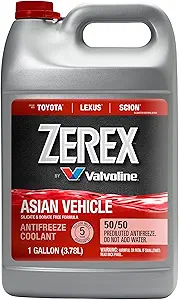 |
| Most Popular A crowd favorite that many people choose with confidence | Zerex Original Green Antifreeze/Coolant Concentrate 1 Gal |  |
| Best Quality Built to a higher standard if you want something more solid | Toyota Genuine Antifreeze Coolant (Gallon) |  |
| Best Budget The cheapest option that still gets the job done reliably | PEAK DEX-Cool Antifreeze + Coolant Concentrate, 1 Gallon |  |
| Most Sold A high-volume bestseller chosen again and again | Zerex Dex‑Cool Antifreeze/Coolant 50/50 Ready‑to‑Use 1 Gallon |  |
| Best Value for Money The sweet spot between price and what you get | PEAK OET Extended Life Red/Pink Concentrate Antifreeze/Coolant, 1 Gal. |  |
| Best Overall The best all-around choice for most situations | Genuine 00272 SLLC2 Engine Coolant/Antifreeze |  |
1. Zerex Asian Vehicle Red 50/50 Prediluted Antifreeze/Coolant 1 gal

| Formulation | Prediluted 50/50 |
|---|---|
| Chemistry | Phosphate HOAT |
| Compatibility note | For Asian vehicle specifications (Toyota, Lexus, Hyundai/Kia listed) |
Zerex Asian Vehicle Red is a ready-to-use 50/50 antifreeze/coolant designed to meet the chemical requirements of many Asian manufacturers. For a Hyundai Tucson, it is used to top off or refill the cooling system without mixing, and its phosphate HOAT chemistry is tuned to protect aluminum and other cooling-system metals from corrosion, rust and scale. The silicate- and borate-free formula helps avoid deposit buildup that can harm modern aluminum radiators and water pumps, while the long-life treatment supports extended service intervals. Practical benefits include direct fit-and-pour convenience, manufacturer-oriented formulation for Asian makes, and broad compatibility with specifications cited on the label. Limitations are that you must verify Tucson model-year coolant specifications before using it and that a dedicated red HOAT coolant is not the right choice for systems requiring a different chemistry; this product is not a universal swap for every coolant type. Follow Hyundai guidance for service intervals and bleed procedures when replacing coolant.
Best for: Reliability-focused buyers who prioritize using a manufacturer-oriented coolant to maintain long-term corrosion protection and reduce the chance of cooling-system issues in a Hyundai Tucson.
Less Ideal for: Drivers who prefer universal or alternative coolant chemistries, or those unwilling to check their Tucson's specified coolant type, should consider other options.
- Prediluted 50/50 ready to pour for quick top-offs or full fills
- Formulated for Asian vehicles with phosphate HOAT chemistry to protect cooling-system metals
- Silicate- and borate-free reduces risk of harmful scale and deposits in aluminum systems
- Requires confirmation that Hyundai Tucson model year specifies red HOAT chemistry before use
- Not compatible with cooling systems that require a different coolant chemistry
Verdict A convenient, long-life red HOAT coolant tailored for Hyundai Tucson owners who want a factory-quality replacement and worry about corrosion and deposits.
2. Zerex Original Green Antifreeze/Coolant Concentrate 1 Gal

| Brand | Zerex (Valvoline) |
|---|---|
| Type | Concentrate antifreeze/coolant |
| Volume | 1 gallon |
| Protection | Corrosion and freeze protection |
Zerex Original Green is a concentrated antifreeze designed for topping off or a full system flush in passenger and light duty vehicles such as the Hyundai Tucson. It provides corrosion protection and freeze resistance using an organic acid inhibitor package and must be mixed with distilled water before use. In practical use the concentrate lets you control dilution for seasonal needs and long‑term protection against rust and scale, and customers report it performs well in older engines and daily drivers. The product is a factory‑quality style coolant trusted by professional and DIY mechanics, but it is not pre‑mixed so you need to measure and dilute correctly. It also uses a traditional green formulation, so verify that the Tucson model year and cooling system specifications call for a green silicate‑based coolant before switching. For convenience seekers it offers reliable protection when matched to the vehicle’s required coolant type, but it requires a small amount of prep compared with ready‑to‑use formulations.
Best for: Drivers who prioritize convenience and wanting a trusted, do‑it‑yourself coolant option for routine maintenance on a Hyundai Tucson, preferring a product they can top off or use for a complete flush.
Less Ideal for: Owners who prefer ready‑to‑use coolant out of the bottle or whose Tucson requires a different factory‑specified coolant chemistry should consider an alternative.
- Concentrated formula lets you mix to desired dilution for seasonal or performance needs.
- Proven corrosion protection with an organic acid inhibitor package for extended system life.
- Works well in older and light‑duty engines commonly found in Hyundai Tucson models when the manufacturer specifies green coolant.
- Sold as concentrate so it requires mixing with distilled water and correct dilution.
- Green silicate‑based chemistry may not be compatible with all Tucson model years that require different coolant formulations.
Verdict A reliable concentrated green coolant that gives DIYers control over dilution and solid corrosion protection for Hyundai Tucson models that call for green antifreeze.
3. Toyota Genuine Antifreeze Coolant (Gallon)

| Brand | Toyota |
|---|---|
| Vehicle Service Type | Car |
| SAE J300 Viscosity Grade | 50 |
| Model | Antifreeze |
This is Toyota's factory-quality undiluted antifreeze sold in a one-gallon container and intended for use when a vehicle requires Toyota long-life coolant. It is used by flushing the cooling system, then diluting the concentrate with distilled or deionized water to the recommended mix ratio and topping the radiator and overflow reservoir. The product's notable points are its genuine manufacturer provenance, consistent red/pink long-life formulation, and the fact it is sold as concentrate so you control final mixture. For a performance-oriented buyer the benefit is chemical compatibility with vehicles that call for Toyota long-life coolant and predictable corrosion protection when mixed correctly. Limitations are that it is sold as concentrate rather than pre-mixed coolant so you must have distilled water and follow a dilution procedure, and the product labeling and viscosity rating offer limited application detail for non-OEM vehicles. Also this is a vehicle-specific factory replacement product rather than a universal all-makes premix.
Best for: Performance-oriented owners who prioritize factory-quality fluids and predictable long-term corrosion protection and are willing to perform a proper system flush and dilution.
Less Ideal for: Drivers who prefer ready-to-use premixed coolant or who want a universal aftermarket formula for multiple makes should consider premixed or multi-vehicle alternatives.
- Genuine Toyota formulation for long-life corrosion and freeze protection when mixed correctly
- Sold as undiluted concentrate so you can set the exact coolant-to-water ratio
- Widely used and documented by owners for proper flushing and refill procedures
- Consistent red long-life chemistry compatible with vehicles that specify Toyota coolant
- Requires correct dilution with distilled or deionized water before use
- No universal fitment guidance for non-Toyota vehicles in the listing
Verdict Buy this if you want factory-quality Toyota long-life concentrate to mix and maintain a performance-focused cooling system; skip it if you need a premixed universal coolant.
4. PEAK DEX-Cool Antifreeze + Coolant Concentrate, 1 Gallon

| Intended chemistry | Orange OAT (DEX‑Cool) concentrate |
|---|---|
| Service life claim | Up to 10 years/150,000 miles with full flush and fill |
| Meets standards | ASTM D3306, D4985, GMW3420, GM6277M |
This PEAK DEX‑Cool product is a concentrated engine coolant intended to be mixed with distilled water to create a 50/50 antifreeze/coolant solution. It is engineered for vehicles requiring an orange organic acid technology (OAT) coolant and claims protection for aluminum and other cooling-system metals, rust and corrosion inhibitors, and an extended service life when the cooling system has been flushed and refilled. In practice you would measure and mix the concentrate before filling the radiator or coolant reservoir, which doubles the usable volume compared with a pre-mix jug. The formula omits amines, phosphate, borate, nitrite and silicate and meets common industry performance specs listed on the label. Important limitations are that this is the concentrated version so buyers must add distilled water correctly to reach the proper freeze/boil protection and it is specified for GM OAT chemistry rather than Hyundai factory coolant formulations, so cross-chemistry compatibility should be confirmed before use in a Tucson.
Best for: Budget-conscious buyers who prioritize getting the most coolant per dollar and are comfortable mixing concentrated fluid themselves for routine coolant service on a Tucson.
Less Ideal for: Drivers who prefer factory-specified, ready-to-pour Hyundai coolant or those unwilling to verify coolant chemistry before adding to their Tucson should choose a Hyundai-approved premix instead.
- Concentrated formula doubles yield compared with pre-mixed coolant when properly diluted
- Designed to protect aluminum and common cooling system metals from corrosion
- Long service-life claim when combined with a full flush and fill
- Free of amines, phosphate, borate, nitrite and silicate to reduce deposit formation
- Formulated specifically for GM OAT chemistry and not branded for Hyundai vehicles, so compatibility is not guaranteed
- Requires correct mixing with distilled water before use which adds a step and risk of incorrect concentration
Verdict A cost-effective concentrated DEX‑Cool option if you need extra yield, but confirm coolant chemistry compatibility with a Hyundai Tucson before using.
5. Zerex Dex‑Cool Antifreeze/Coolant 50/50 Ready‑to‑Use 1 Gallon

| Brand | Valvoline |
|---|---|
| Model | Dex-Cool |
| Formulation | 50/50 ready-to-use |
| Technology | Organic Acid Technology (OAT) |
Zerex Dex‑Cool is a ready‑to‑use, orange OAT antifreeze designed to protect modern cooling systems from corrosion, deposits, freezing and boiling. It is typically used when topping off the radiator or doing a full coolant flush and comes pre-mixed at a 50/50 ratio so you can pour directly into the system without measuring. Notable features include a silicate- and phosphate-free OAT formula, claimed compatibility with vehicle manufacturers that specify Dex‑Cool, and additives that guard aluminum radiators, water pumps and other metal parts against rust and scale. Practical benefits are straightforward: easy application, long service life for OAT chemistry, and broad protection against the common causes of coolant failure. Important limitations are that Dex‑Cool is a specific chemical formulation so it must only replace like-for-like coolant in systems that require Dex‑Cool; mixing with different coolant chemistries can cause issues, and color alone is not a guarantee of compatibility.
Best for: A risk-averse mainstream buyer who prioritizes factory-compatible maintenance and long-term engine protection for routine service and top-offs on their Hyundai Tucson.
Less Ideal for: Drivers who need a universal or hybrid coolant solution for multiple vehicles with different coolant chemistries should consider alternatives designed for cross-compatibility.
- Ready-to-use 50/50 mix removes need to dilute before filling
- Organic acid technology resists corrosion and protects aluminum components
- Pre-formulated for vehicles that specify Dex‑Cool chemistry
- Silicate- and phosphate-free formulation reduces deposit formation
- Not suitable to mix with other coolant chemistries; must match vehicle specification
- Product color or brand does not guarantee compatibility with every model year Tucson
Verdict A factory‑style, ready‑to‑use Dex‑Cool coolant ideal for Hyundai Tucson owners who want a risk-averse, manufacturer‑specified replacement, but do not mix it with other coolant types.
6. PEAK OET Extended Life Red/Pink Concentrate Antifreeze/Coolant, 1 Gal.

| Volume | 1 gallon |
|---|---|
| Vehicle recommendation | Designed for Asian vehicles including Hyundai |
| Technology | Phosphate-Enhanced Organic Acid Technology (POAT) |
This PEAK OET concentrate is a phosphate-enhanced organic acid technology coolant sold in a one-gallon jug intended for mixing and service in Asian vehicles. For a Hyundai Tucson it is typically used to flush and refill the cooling system or to top off after a drain and fill; one gallon of concentrate makes about two gallons of 50/50 mix, which makes it economical for routine maintenance. The formula is designed to reduce corrosion and help protect aluminum and other cooling components for long service intervals when installed as part of a complete flush and fill. Notable features include its vehicle-specific POAT chemistry suited to many Hyundai systems and a bittering agent to discourage ingestion. Limitations are that it is a concentrate so you must mix to the correct ratio, and color alone should not be used to confirm compatibility; always check the Tucson service manual for the required coolant type before replacing fluid.
Best for: Practical optimizers who want a cost-effective coolant solution for regular maintenance on a Hyundai Tucson and prefer buying concentrate to cover multiple service intervals.
Less Ideal for: Drivers who want a pre-mixed, ready-to-use bottle or who are unsure which coolant chemistry their Tucson requires without consulting the vehicle manual.
- Concentrated bottle yields multiple gallons of ready-to-use coolant when mixed, improving cost per service.
- Formulated for Asian vehicles with POAT chemistry to help protect cooling system metals and prevent corrosion.
- Manufacturer guarantees long service life when used with a full flush and fill procedure.
- Bittering agent added to deter accidental ingestion.
- Requires correct dilution and proper flushing for warranty protection and best performance.
- Color and labeling can vary between formulations so you must confirm Hyundai Tucson coolant requirements before use.
Verdict A budget-friendly concentrated coolant tuned for Hyundai cooling systems that saves money per service but requires correct mixing and confirmation of compatibility.
7. Genuine 00272 SLLC2 Engine Coolant/Antifreeze

| Manufacturer Part Number | 00272SLLC2 |
|---|---|
| Brand | Genuine |
| Item model number | 13 |
| Is Discontinued By Manufacturer | No |
This Genuine 00272 SLLC2 engine coolant is a factory-quality antifreeze designed to maintain stable engine temperatures and provide corrosion protection for cooling system components. It is typically used during routine coolant replacement or when topping off the reservoir after maintenance. The product comes in a ready-to-use container with a bittering agent to discourage ingestion and a distinct pink color that makes fluid level checks straightforward. Users report reliable temperature regulation and good long-term protection for aluminum and other metals found in modern engines. The main practical benefit is peace of mind from using a manufacturer-branded formula that matches factory recommendations for vehicles that specify this part. The primary limitation is compatibility: this specific part number is intended for certain manufacturer specifications and should only be used if it matches the Hyundai Tucson coolant requirement; if your Tucson requires a different formula, choose the coolant specified in the owner's manual to avoid potential cooling-system issues.
Best for: Balanced buyers who prefer using factory-quality fluids for reliable, long-term cooling performance and want a product aligned with manufacturer recommendations for maintenance.
Less Ideal for: Buyers seeking the lowest-cost generic coolant or those whose Hyundai Tucson specifically calls for a different coolant specification should consider other options.
- Factory-brand formula developed to match manufacturer cooling specifications.
- Ready-to-use, easy-pour container with a visible pink color for simple level checks.
- Provides corrosion protection and stable temperature regulation reported by long-term users.
- May not match Hyundai Tucson coolant specification if the vehicle requires a different formula or part number.
- Higher cost than some generic coolants, which may be noticeable for full-system flushes.
Verdict Choose this Genuine coolant if your Hyundai Tucson specifies this part number and you want a factory-quality fluid; skip it if your model requires a different formula.
Choosing the Right Hyundai Tucson Antifreeze: Key Factors to Consider
Coolant Chemistry
The chemical base and inhibitor package determine how well a coolant prevents corrosion and how long it lasts. Organic acid technology, hybrid formulations, and traditional ethylene glycol-based coolants each protect metals differently and have different recommended service intervals.
Picking the right chemistry matters because incompatible inhibitor types can reduce protection or cause deposit formation. Confirming the recommended chemistry helps ensure compatibility with existing coolant and the engine's materials to reduce the chance of leaks or premature component wear.
Freeze And Boilover Protection
A coolant must protect against freezing in cold climates and resist boiling at high engine temperatures. Freeze point and boilover point depend on concentration, so following mixing guidelines is essential to achieve the stated protection.
Consider the typical ambient temperatures where you drive and the vehicle's cooling-system pressure cap rating. Adequate thermal protection ensures reliable heater operation in winter and stable engine temperatures in summer, reducing the risk of overheating or freeze-related damage.
Corrosion Inhibitor Performance
Effective inhibitors protect aluminum heads, blocks, radiators, and other cooling-system components from pitting and galvanic corrosion. The quality and durability of inhibitor packages can vary widely and directly influence component lifespan.
Long-lasting inhibitors reduce the frequency of full coolant changes and help prevent slow leaks and cooling efficiency loss. Check technical data for claimed protection duration and whether the formulation targets the metals and alloys used in modern compact SUVs.
Compatibility With Seals And Hoses
Coolant interacts with rubber hoses, gaskets, and plastic components. Some formulations can swell or harden certain elastomers over time, leading to leaks or premature replacement of hoses and seals.
Choosing a coolant known to be compatible with typical automotive elastomers and plastics reduces maintenance surprises. When changing coolant types, a flush may be recommended to avoid mixing incompatible inhibitor chemistries that could harm seals or reduce effectiveness.
Service Life And Maintenance Interval
Different antifreezes advertise varying service lives, from shorter-life traditional formulas to long-life organic acid types. Longer service intervals mean less frequent coolant changes but may require initial flushing and proper initial filling.
Consider how often you are willing to perform maintenance and whether you prefer longer-interval products to minimize downtime. Also factor in clear labeling and guidance on concentration and replacement intervals to make future maintenance straightforward.
Ease Of Use And Mixing Instructions
Some coolants are sold pre-mixed while others require dilution to reach the correct freeze and boilover protection. Accurate mixing matters for performance, and unclear instructions increase the risk of incorrect concentration.
Look for products with straightforward labeling, clear mix ratios for various climates, and guidance on whether a cooling-system flush is required before switching. Ease of use reduces installation errors and helps maintain consistent coolant performance.
FAQ
How often should I change the coolant in a Hyundai Tucson?
Interval recommendations vary by coolant chemistry and driving conditions. Many long-life formulations are designed to last several years or tens of thousands of miles, while traditional formulas may need more frequent changes. Check the vehicle manual and the coolant technical data to set a maintenance schedule based on expected service life and driving conditions.
Can I mix different types of antifreeze in the Tucson?
Mixing different inhibitor technologies can reduce corrosion protection and may cause deposits. It often depends on the specific formulations involved. If you must change types, a full system flush is usually advisable to avoid compatibility issues and maintain proper inhibitor performance.
What coolant concentration should I use for winter driving?
Concentration affects freeze point and boilover protection. Typical recommendations aim for a mixture that protects below expected low temperatures while maintaining effective corrosion inhibitors. Refer to the coolant label for mix ratios and consider local winter lows when determining the proper dilution.
Is an antifreeze flush necessary when switching coolant types?
A flush is often recommended when changing inhibitor chemistries to remove residual additives that could react negatively. Flushing helps ensure the new coolant can provide its full protection and reduces the risk of deposits or reduced corrosion control.
Does the type of antifreeze affect heater and climate control performance?
Yes. Coolant properties like thermal conductivity and freeze point influence how effectively the system transfers heat to the cabin. Using the correct coolant and concentration helps maintain consistent heater performance in cold weather and stable engine temperatures in warm conditions.
How We Chose the Best Hyundai Tucson Antifreeze
We focused on products that meet the specific chemical and performance expectations for passenger-vehicle cooling systems while avoiding niche or industrial formulations. Selection criteria included freeze and boilover protection to match regional temperature extremes, measured corrosion resistance for aluminum and alloy components, and compatibility with common seal materials used in compact SUVs. We also considered expected service life between coolant changes, manufacturer-specified coolant chemistry (such as organic acid or ethylene glycol formulations), and clarity of mixing instructions and concentration guidance. Products that required complex mixing techniques or were primarily intended for heavy-duty or racing applications were excluded. Finally, we prioritized options with clear technical data on inhibitor type and longevity so buyers can make informed choices about maintenance intervals and coolant type for their Hyundai Tucson.
Our full evaluation process is outlined in our review methodology.
Conclusion
Choosing the right Hyundai Tucson antifreeze means matching coolant chemistry to the vehicle's materials, picking a concentration that suits local temperatures, and considering inhibitor longevity to set maintenance intervals. Prioritize formulations that list clear compatibility with automotive elastomers and provide technical data on corrosion protection. Balance tradeoffs between longer service life and initial maintenance complexity, such as whether a flush is needed when switching chemistries. Following the factors above will help you maintain cooling-system reliability and avoid common failures tied to improper coolant selection.
Explore More:
- Check out all Hyundai Tucson parts & accessories
- Explore Fluids & Chemicals
- Browse all Accessories