Note: This article contains affiliate links. If you click on these links and make a purchase, I may earn a small commission at no extra cost to you. This helps support my research and content. Read my full affiliate disclosure here.
Upgrading your Toyota 4Runner cat-back exhaust system can improve exhaust flow, reduce weight, and change the sound profile to better match how you use the truck. Choosing the right system matters because fit, materials, and how the exhaust is routed affect durability, installation time, and the tone you get at different engine loads. This guide presents four shortlisted options that represent common approaches in this category. We evaluated each pick for build materials, fitment to the 4Runner, ease of installation, and how the system influences sound and performance. Read on to see which attributes matter most for the way you drive and maintain your 4Runner.
Looking for other parts? See all Toyota 4Runner parts & accessories.
Top Picks at a Glance
| Best Quality Built to a higher standard if you want something more solid | MagnaFlow Overland Series Cat-Back Exhaust System for 1996–2002 Toyota 4Runner |  |
| Best Budget The cheapest option that still gets the job done reliably | Gibson Performance Exhaust 618815 Cat-Back Single Exhaust System |  |
| Most Sold A high-volume bestseller chosen again and again | aFe Power Rebel Series Cat-Back Exhaust System for Toyota FJ Cruiser (3" Stainless) |  |
| Best Overall The best all-around choice for most situations | MBRP XP Series 3" Dual Split Rear Race Cat-Back Exhaust System (S7275409) |  |
1. MagnaFlow Overland Series Cat-Back Exhaust System for 1996–2002 Toyota 4Runner

| Series | Overland |
|---|---|
| Exit Style | Single Passenger Side Rear |
| Main Piping Diameter | 2.5" |
| Inlet Connection Type | Bolt-On |
| Muffler Type | Straight-Through / Tuned Chamber |
The MagnaFlow Overland Series cat-back replaces the factory rear section with mandrel-bent 2.5" piping, a straight-through muffler and a tuned chamber to deliver dyno-proven performance and a deeper exhaust note without aggressive highway drone. It is built from 100 percent stainless steel with machine-accurate fitment intended for bolt-on installation, and the undercarriage-hugging layout and passenger-side rear exit are designed to free up ground clearance and departure angle for off-road use. MagnaFlow’s No Drone Technology uses a quarter-wave NDT resonator to mute annoying mid-range frequencies, which makes long highway drives less fatiguing while preserving engine character. The system is optimized to work with common bolt-on modifications, and includes hangers and mounting brackets for easier installation, though no gasket is provided. Some buyers report surface rust over time in harsh climates and the sound can be louder than expected even at the quietest setup, so expect a more assertive tone and monitor corrosion in salted or wet environments.
Best for: Performance-oriented buyers who prioritize a durable, bolt-on upgrade that deepens exhaust tone and improves off-road clearance for focused driving and overland use.
Less Ideal for: Drivers seeking a subtle, OEM-quiet replacement or those in very corrosive environments who prefer a different finish or heavier anti-corrosion protection should consider other options.
- 100% stainless steel construction for durability and a lasting finish
- Mandrel-bent 2.5" piping and straight-through muffler for improved flow and dyno-backed performance
- High-clearance, undercarriage-hugging design improves departure angle for off-road use
- No Drone Technology resonator reduces interior highway drone for long trips
- Includes hangers and mounting brackets for bolt-on installation
- No exhaust gasket included which may require buying a separate gasket for a sealed connection
- Reported surface corrosion in some climates indicates finish may need attention over time
Verdict A factory-quality stainless-steel cat-back engineered to boost flow, clear more ground, and give the 4Runner a deep, highway-friendly tone.
2. Gibson Performance Exhaust 618815 Cat-Back Single Exhaust System

| Material | Stainless steel |
|---|---|
| Tubing diameter | 2.50-in. |
| Tip | 4-in. polished T304 rolled slash-cut |
| Exit location | Straight out the back behind rear tire |
This Gibson single-side cat-back replaces the factory rear section on the Toyota 4Runner to deliver stronger low-end torque, a fuller exhaust note, and a polished 4-inch rolled slash-cut tip. It uses 2.5-inch mandrel-bent stainless tubing and a baffled, chambered muffler intended to minimize interior drone while still producing an aggressive sound outside the cabin. Installation is bolt-on and designed to use the factory hangers so a professional installer is not required for most owners. Gibson advertises dyno gains focused between 1800 and 3000 rpm, which translates to easier passing and improved hill-climbing in daily driving and light towing. The system exits behind the rear tire for a factory-looking fit. Limitations include a louder exterior tone than stock and occasional heat-related ticking reported at idle on some installations, and this is not a high-flow multi-exit performance race system. For a budget-conscious 4Runner owner who wants a reliable, corrosion-resistant upgrade with noticeable low-end improvement, this is a practical option.
Best for: Budget-conscious 4Runner owners who want a factory-quality, bolt-on exhaust that improves low-end power and adds a more assertive but not extreme sound for daily driving and light towing.
Less Ideal for: Drivers seeking maximum top-end horsepower, a race-oriented free-flow system, or a near-silent exhaust should consider higher-end or different-style systems instead.
- Stainless mandrel-bent 2.50-inch tubing for improved flow and corrosion resistance
- Baffled and chambered muffler design aims to reduce interior drone while keeping an aggressive exterior tone
- Bolt-on fitment that uses factory hangers for straightforward installation
- Polished 4-inch T304 stainless rolled slash-cut tip for a finished, factory-quality appearance
- May be louder than stock from outside the vehicle, which could bother noise-sensitive users
- Some owners report heat-related ticking or pinging during idle after installation
Verdict A cost-conscious, factory-style cat-back for the Toyota 4Runner that delivers better low-end torque and a fuller sound with straightforward bolt-on installation.
3. aFe Power Rebel Series Cat-Back Exhaust System for Toyota FJ Cruiser (3" Stainless)

| Fits | 2007–2014 North America, 2007–2016 export (V6 4.0L) |
|---|---|
| Tube diameter | 3" |
| Tips | Dual 3.5" black 304 stainless clamp-on tips |
| Construction | Mandrel-bent stainless steel with MIG welds |
This aFe Power Rebel Series cat-back replaces the factory rear section with 3" mandrel-bent stainless tubing, a free-flowing muffler, and dual black 3.5" clamp-on tips that exit in front of the rear passenger tire. It is used as a direct bolt-on replacement using factory mounting locations and bayonet-style hangers, so installation requires no cutting and uses the included clamps and hardware. In real-world use the system reduces backpressure to free up a few horsepower and torque while producing a deeper, more aggressive exhaust note that stays relatively quiet at cruise yet opens up under throttle. The stainless construction and MIG welds support longevity and the high-quality band clamps aim to minimize leaks. Expect a noticeable change in tone and a unique side-exit appearance, but not a dramatic power overhaul; sound level and character may be louder than some expect depending on vehicle setup and driving style.
Best for: Risk-averse mainstream buyers seeking a factory-style performance upgrade that improves sound and flow without complex installation or major vehicle modification.
Less Ideal for: Drivers who need a very quiet, stock-like exhaust or who want adjustable routing and tip placement should consider different options or professional customization.
- Mandrel-bent 3" stainless tubing for improved flow and corrosion resistance.
- Bolt-on fit using factory mounting locations and included hardware for straightforward installation.
- Free-flowing muffler that reduces high-pitch drone while delivering a deeper, aggressive tone under throttle.
- Dual 3.5" black stainless tips with laser-etched logos provide a distinctive middle-side exit styling.
- High-quality band clamps and bayonet hangers designed to reduce leaks and maintain fit over time.
- Designed for a specific fit and exit orientation so appearance and routing are not adjustable.
- Produces a louder, more aggressive sound that may not suit noise-sensitive neighborhoods or drivers.
Verdict A bolt-on stainless cat-back that gives Toyota owners a distinctive side-exit look and louder, stronger tone with modest performance gains while keeping installation simple.
4. MBRP XP Series 3" Dual Split Rear Race Cat-Back Exhaust System (S7275409)
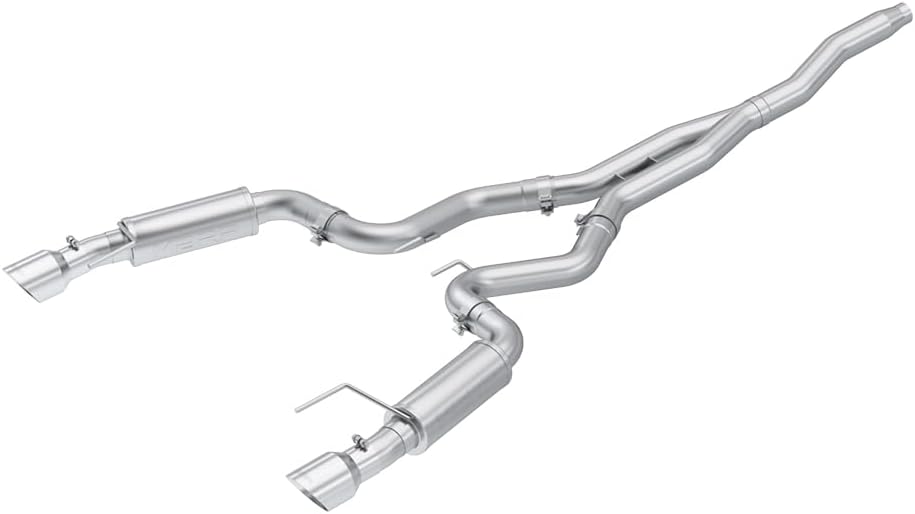
| Series | XP Series |
|---|---|
| Inlet/Tube Diameter | 3" |
| Tip Diameter | 4.5" |
| Design | Dual split rear, race version |
The MBRP XP Series race cat-back is a bolt-on exhaust meant to replace the factory rear section to improve flow, sound, and performance. Built from mandrel-bent 16-gauge T409 stainless-style tubing with a dual split rear design and large 4.5 inch tips, it is intended to reduce backpressure, sharpen throttle response, and produce a deep, aggressive note with minimal highway drone. Installation is described as straightforward using factory hangers and supplied clamps so a competent DIYer or a shop can complete it in a couple hours. Customers report a noticeable sound and perceived power improvement and consistent fit for many installations, though some users have found alignment or tip fit issues that can require slight adjustments. The system is aimed at enthusiasts who want a louder, muscle-car tone while keeping a mostly civilized character at cruising speeds. Expect robust sound and improved flow, but be prepared to check fitment alignment during install and accept a heavier, more aggressive exhaust character compared with stock.
Best for: Balanced buyers who want a noticeable sound and measurable flow gains without an exotic or hard-to-install setup, and who prioritize a strong, muscle-like exhaust note for daily driving and spirited use.
Less Ideal for: Drivers seeking a factory-quiet replacement, ultra-lightweight or premium thick-gauge stainless construction, or those unwilling to adjust minor fitment during installation should consider alternatives.
- Bolt-on design using factory hangers for relatively simple installation
- Mandrel-bent tubing and tuned muffler design to improve exhaust flow and throttle response
- Delivers a deep, aggressive tone with controlled highway drone
- Includes clamps and hardware so no extra parts are typically required
- Some users report fitment and alignment issues requiring adjustments or minor welding
- Constructed from thinner 16-gauge material compared with pricier stainless systems which may age differently
Verdict A relatively affordable, bolt-on cat-back that gives a deep, performance-oriented tone and improved flow but may need minor fitment tweaks during installation.
Choosing the Right Toyota 4Runner Cat-back Exhaust System: Key Factors to Consider
Material and Corrosion Resistance
The metal and coating of the exhaust largely determine how long the system will resist rust and deterioration. Stainless steel alloys offer better long-term resistance to road salt and moisture than plain steel, which helps preserve appearance and structural integrity over years of use.
Weld quality and joint design also influence corrosion resistance because poorly sealed seams can trap moisture and accelerate rust. Consider whether the manufacturer uses higher-grade stainless or applies protective finishes, since that affects maintenance needs and how long the system maintains fit and sealing under normal driving conditions.
Fitment and Exhaust Routing
Accurate fitment to the Toyota 4Runner reduces the need for adjustments during installation and prevents contact with chassis components. Proper routing minimizes stress on hangers and brackets, which reduces the chance of leaks and broken mounts over time.
Look for systems that match existing hanger locations and flange patterns to avoid cutting or bending the exhaust. A system that follows the vehicle’s underbody contours will be easier to install and is less likely to suffer from vibration or scrape damage during off-road use or steep driveways.
Sound Profile and Muffler Design
Different muffler types and internal packing create distinct sound signatures ranging from mellow and quiet to deep and aggressive. Consider how you use the 4Runner: a commuter setup benefits from muted resonance and minimal drone, while a vehicle used for spirited driving may favor a louder, fuller tone.
Also consider sound at various engine speeds and load conditions. Some designs emphasize idle and low-RPM tone, while others reveal their character only at higher RPM. Think about cabin drone on highway speeds and how the sound blends with the vehicle’s purpose.
Installation Complexity and Hardware
Installation time and the tools required can vary widely between bolt-on systems and those that need cutting or welding. Systems that use vehicle-specific flanges and quality clamp hardware will typically reduce install time and the need for shop services.
Check whether the kit includes all necessary gaskets, bolts, and hangers. If you plan a DIY installation, prioritize systems with straightforward instructions, pre-bent sections that align with the factory hangers, and clear guidance on torque specs to ensure a secure, leak-free fit.
Performance Impact and Backpressure
A cat-back system changes exhaust flow characteristics downstream of the catalytic converter, which can affect throttle response and perceived power. Systems designed with smoother bends and larger-diameter piping can reduce backpressure and help the engine breathe more freely, especially at higher RPMs.
However, excessive diameter or poorly tuned plumbing can reduce low-end torque or create unwanted resonance. Balance the desire for peak flow with the driving conditions you use most often to avoid unintended tradeoffs in drivability.
Maintenance and Serviceability
Consider how easy it will be to service or replace sections of the exhaust over time. Systems with modular sections, accessible clamps, and replaceable hangers make repairs simpler if a component is damaged by road debris or corrosion.
Also think about availability of replacement parts and whether the design allows for straightforward inspection of welds and joints. Better serviceability reduces long-term ownership hassle and can keep the system performing well with routine checks.
FAQ
Will a cat-back exhaust system change my 4Runner’s fuel economy?
A cat-back system can slightly affect fuel economy, but changes are usually modest. Systems that reduce backpressure and improve exhaust flow may yield small efficiency gains at higher engine loads, while louder designs that increase flow diameter could slightly alter low-end drivability. Overall, fuel impact often depends on driving style and specific system characteristics.
How difficult is catback exhaust installation on a Toyota 4Runner?
Difficulty varies by design. Many cat-back systems are bolt-on with factory-style flanges and can be installed with basic tools in a driveway or garage. More involved kits that require cutting, welding, or hanger relocation usually need professional installation. Check whether the kit includes all necessary hardware and clear instructions before starting a DIY job.
Will a cat-back system cause excessive drone inside the cabin?
Drone depends on muffler design, pipe diameter, and the vehicle’s cabin acoustics. Some systems are tuned to minimize low-frequency drone, while others prioritize a louder, fuller tone that can produce noticeable resonance on highway speeds. If cabin comfort is a priority, look for systems specified to reduce drone or that use resonators to tame repetitive frequencies.
Is stainless steel worth it for a 4Runner exhaust?
Stainless steel generally offers better resistance to corrosion and longer service life, which can be worthwhile for vehicles driven in wet or salty conditions. While initial material cost may be higher, the reduced risk of rust and longer intervals before replacement often make stainless a practical choice for long-term ownership.
Does a cat-back exhaust affect engine warranties or emissions?
A cat-back system typically replaces components downstream of the catalytic converter and often does not affect emissions control hardware. However, warranty and emissions rules vary by region and manufacturer. It is advisable to confirm local regulations and warranty terms before installing any aftermarket exhaust.
How We Chose the Best Toyota 4Runner Cat-back Exhaust System
We prioritized systems designed specifically for the Toyota 4Runner and assessed candidates across several concrete criteria relevant to real-world ownership. Key filters included materials and corrosion resistance, exhaust routing and fit accuracy, acoustic design and expected sound character, clamp and flange hardware quality, and the complexity of installation for common DIY or shop fits. We also considered systems that support common engine and trim variants without requiring additional fabrication. Products were excluded if they lacked clear vehicle-specific fitment information, used ambiguous materials, or relied heavily on adapters that complicate installation. We avoided options that focused solely on extreme sound at the cost of poor fit or short-term durability. The final list emphasizes balanced choices that reflect long-term daily use, sound preference tradeoffs, and reasonable installation effort.
Our full evaluation process is outlined in our review methodology.
Conclusion
Choosing the right Toyota 4Runner cat-back exhaust system means balancing materials, sound preference, and installation practicality. Prioritize corrosion-resistant construction and accurate fitment to minimize future maintenance and ensure a straightforward install. Weigh the desired sound character against potential cabin drone and the system’s impact on low-end response. Focusing on these tradeoffs will help you pick a system that matches how you drive and how long you expect it to last.
Explore More:
- Check out all Toyota 4Runner parts & accessories
- Explore Exhaust & Emissions
- Browse all Auto Parts