Note: This article contains affiliate links. If you click on these links and make a purchase, I may earn a small commission at no extra cost to you. This helps support my research and content. Read my full affiliate disclosure here.
If you drive a Mitsubishi Eclipse, choosing the right radiator matters for everyday reliability and long-term engine health. A correctly sized, efficient radiator helps prevent overheating, reduces pressure on the cooling system, and supports consistent cabin heating performance. This guide covers seven shortlisted radiators selected for fitment and cooling performance. We evaluated each option across criteria relevant to Eclipse owners, including cooling capacity and installation compatibility. Read on to find which features matter most before you choose a replacement.
Looking for other parts? See all Mitsubishi Eclipse parts & accessories.
Top Picks at a Glance


1. A-Premium Radiator Assembly for Mitsubishi Eclipse 2006–2012 2.4L (Automatic)

| Vehicle Fitment | Mitsubishi Eclipse 2006-2012 L4 2.4L (Automatic) |
|---|---|
| Transmission Oil Cooler Included | No |
| Engine Oil Cooler Included | No |
| Reference Numbers | 2843, CU2842, MI3010209, MN180279 |
This A-Premium radiator assembly replaces the factory unit on Mitsubishi Eclipse 2006–2012 2.4L cars with automatic transmission and is intended to return the engine cooling system to proper operating condition. It installs like a direct replacement and includes the core sized to match the original layout; transmission and engine oil coolers are not included. Typical use is as a like-for-like repair when the original radiator is leaking, clogged, or damaged. The construction is tested to meet performance standards and buyers report good fitment and leak-free operation when packaged and shipped intact. Practical benefits are straightforward: restores cooling capacity, avoids adaptive modifications, and simplifies installation for independent mechanics or DIYers familiar with Eclipse cooling systems. Important limitations are the lack of integrated oil or transmission coolers and dependence on correct hose and mounting compatibility, so additional parts may be needed for units with extra fittings or sensors.
Best for: Reliability-focused buyers who prioritize restoring factory cooling performance with a straightforward, direct replacement and want a product that reduces installation unknowns.
Less Ideal for: Buyers who need an upgraded performance radiator or an integrated oil/transmission cooler should consider other options tailored to those needs.
- Direct-fit design for Mitsubishi Eclipse 2006–2012 2.4L automatic for easier installation
- Manufactured and tested to restore factory-style cooling performance
- Reported good packaging reduces risk of shipping damage
- Single-unit replacement simplifies diagnosis and repair of overheating or leaks
- Does not include an integrated transmission or engine oil cooler
- May require extra hoses, fittings, or sensor transfers for some vehicle configurations
Verdict A practical, direct-fit radiator replacement for Mitsubishi Eclipse owners who want to reliably restore factory cooling without integrated oil or transmission coolers.
2. RAYTEN Radiator for 1996-1999 Mitsubishi Eclipse 2.4L L4

| Vehicle fitment | 1996-1999 Mitsubishi Eclipse 2.4L L4 |
|---|---|
| Core material | Aluminum core |
| Manufacturer | Rayten |
| Part number | Ray-radiator-2197 |
This RAYTEN radiator is a direct-replacement cooling unit intended for the 1996–1999 Mitsubishi Eclipse 2.4L L4. It installs in place of the factory radiator to restore engine cooling after a leak or failure and is typically used during routine repairs or as part of a restoration. Notable features listed include an aluminum core and sealed water tanks designed to resist corrosion and handle normal thermal cycles, which should provide reliable cooling under everyday driving conditions. Buyers will appreciate that it is marketed as leakproof and tested for compatibility with the specified Eclipse fitment, making the swap straightforward for DIY enthusiasts or professional installers. Limitations include occasional fitment or clearance differences reported by users, so small adjustments or bracket clearance work may be necessary during installation. The listing references after-sales support and a two-year service commitment, which can ease concerns if fitment problems arise.
Best for: Convenience-driven buyers who want an easy, vehicle-specific cooling replacement with manufacturer support and minimal parts hunting.
Less Ideal for: Owners seeking an exact factory-matched unit with no clearance changes or those who need a performance-upgrade radiator for high-demand driving should consider other options.
- Direct replacement for 1996–1999 Mitsubishi Eclipse 2.4L, simplifying selection and installation
- Aluminum core with sealed water tanks for corrosion resistance and thermal durability
- Designed to be leak-resistant, reducing the chance of immediate coolant loss after install
- Manufacturer offers after-sales support and a two-year service window
- Some buyers reported minor fitment and clearance differences that required bracket or hose adjustments
- Packaging quality varied in reviews which could increase the risk of transit damage
Verdict A practical, vehicle-specific replacement radiator for convenience-focused Eclipse owners, but check fitment clearances before install.
3. Mishimoto X-Line Performance Aluminum Radiator for Mitsubishi Eclipse (1990–1994)

| Fitment | Mitsubishi Eclipse 1990–1994 |
|---|---|
| Core rows | 3 |
| Construction | 100% brazed aluminum |
| Core thickness | 2 inches |
This Mishimoto X-Line radiator replaces the factory unit on 1990–1994 Mitsubishi Eclipse models with a three-row, triple-core aluminum design intended to reduce operating temperatures under both street and track use. It installs as a direct factory-quality fit so no cutting or modification is required, making it suitable for a straightforward upgrade during routine cooling-system work. The larger core and 16% thinner tubes increase surface contact and airflow through the fins, which helps dissipate heat more effectively than the stock radiator during spirited driving or towing. Polished end tanks and full brazed-aluminum construction keep the assembly lightweight while resisting corrosion. Important limits to note are that this is a vehicle-specific performance part so benefits are focused on improved cooling rather than changes to factory packaging or mounting, and installation may still require draining and refilling the cooling system plus reusing or replacing hoses and fittings. For a performance-oriented Eclipse looking for a durable, higher-capacity cooling solution, this is a practical upgrade.
Best for: Performance-oriented owners who prioritize reliable, higher-capacity cooling for spirited driving or occasional track use on a 1990–1994 Mitsubishi Eclipse.
Less Ideal for: Owners seeking a basic budget replacement that only restores original performance or those who need a universal or multi-vehicle radiator solution.
- Direct factory-quality fit for 1990–1994 Mitsubishi Eclipse so no cutting or modification required
- Triple-core, three-row aluminum construction increases cooling capacity over stock
- 100% brazed aluminum and polished end tanks for corrosion resistance and lower weight
- Designed for cooling performance only and does not change mounting or accessory layout
- May require standard cooling system maintenance during installation such as hose or clamp replacement
Verdict A direct-fit, triple-core aluminum radiator that gives 1990–1994 Mitsubishi Eclipse owners meaningful cooling gains for performance driving.
4. ANPART Complete Aluminum Radiator for 2006–2012 Mitsubishi Eclipse

| Vehicle fit | 2006–2012 Mitsubishi Eclipse |
|---|---|
| Material | Aluminum |
| Product type | Complete radiator assembly |
This ANPART aluminum radiator is a complete direct-fit replacement for 2006–2012 Mitsubishi Eclipse models and is intended to replace a failed or leaking factory radiator. It uses an aluminum core and fin construction to transfer heat from engine coolant to incoming air and installs in the same mounting positions as the original for a straightforward swap. Typical use is a one-time replacement during routine cooling system repairs or after a failure; it is sized and shaped to match fitment for the listed model years and works with the vehicle's existing hoses and fan assembly. The practical benefits are simple: aluminum construction resists corrosion better than some older cores, and a complete radiator reduces the need to reuse a damaged core. Limitations include limited public data on internal tank materials and only a basic parts listing rather than extended testing or performance specs, so buyers who want performance upgrades or documented flow/fin density numbers should consider higher-end options.
Best for: Budget-conscious owners seeking an affordable, factory-style replacement radiator for routine repairs on a Mitsubishi Eclipse who prioritize cost and straightforward fitment over performance tuning.
Less Ideal for: Drivers who want upgraded cooling performance, tracked use, or documented lab-tested flow and thermal data should choose a performance radiator instead.
- Direct-fit design for 2006–2012 Mitsubishi Eclipse simplifies installation
- Aluminum core improves heat transfer and corrosion resistance compared with older materials
- Complete radiator assembly reduces the need to salvage parts from a damaged unit
- Multiple warehouse distribution noted for quicker delivery to buyers
- No published detailed specs such as core thickness, fin density, or flow rates
- Manufacturer information does not specify tank material or pressure rating
Verdict A wallet-friendly, direct-fit aluminum replacement for Mitsubishi Eclipse owners who need a straightforward cooling system repair rather than a performance upgrade.
5. PACIFIC BEST INC. Replacement Radiator for 2006–2012 Mitsubishi Eclipse 3.8L
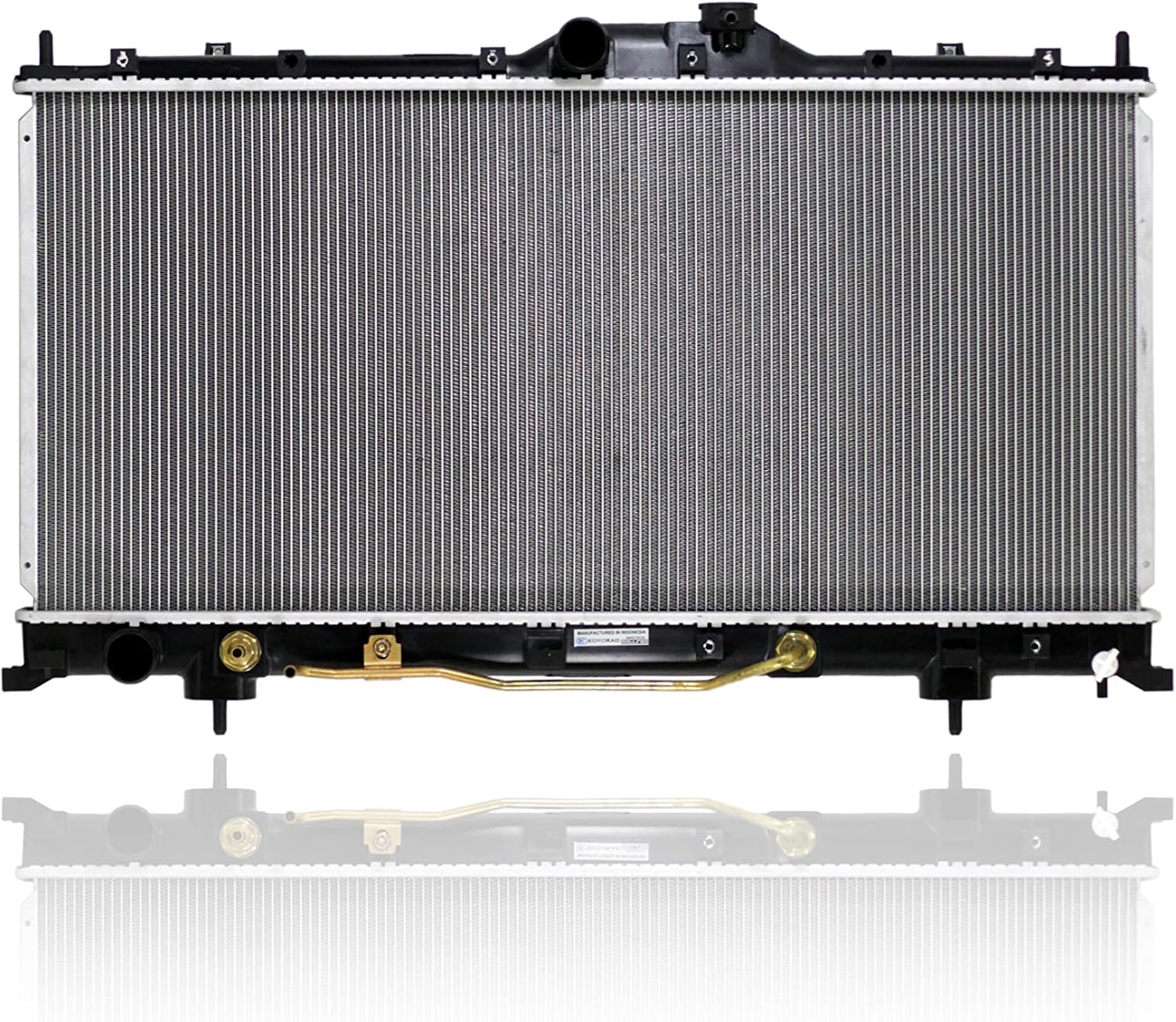
| Vehicle fit | 2006–2012 Mitsubishi Eclipse Coupe, 2007–2012 Spyder 3.8L |
|---|---|
| Core material | Aluminum core |
| Tank material | Plastic tanks |
| Manufacturer | PACIFIC BEST INC. |
This PACIFIC BEST INC. radiator is a direct-fit replacement engineered to match factory cooling performance for the 2006–2012 Mitsubishi Eclipse Coupe and 2007–2012 Spyder with the 3.8L automatic. It uses an aluminum core with plastic tanks and is sold as a complete radiator intended for straightforward installation without cutting or modification. In use it restores cooling capacity and helps prevent overheating when the original unit fails or develops leaks. Notable points are its claimed OEM-equivalent construction, drop-in fitment, and core dimensions sized to the factory layout. Practical benefits include easier installation for home mechanics or shops and the confidence of a product designed to the vehicle's original specifications. Limitations to consider are the plastic tank construction versus full-metal alternatives and a one-year manufacturer warranty, which may be shorter than some premium aftermarket options.
Best for: Risk-averse mainstream buyers seeking a straightforward, factory-spec replacement for their Mitsubishi Eclipse who prioritize fitment reliability and predictable cooling performance.
Less Ideal for: Drivers who want the longest-lasting heavy-duty solution or a performance upgrade should consider all-metal or high-capacity radiators from specialist manufacturers.
- Direct-fit design for 2006–2012 Mitsubishi Eclipse Coupe and 2007–2012 Spyder 3.8L for no-modification installation
- Aluminum core provides efficient heat transfer consistent with factory cooling needs
- Manufactured to OEM specifications to restore original cooling performance
- Supplied as a complete radiator ready to install
- Plastic tanks instead of all-metal construction may be less durable over long term
- Manufacturer warranty coverage is limited to one year
Verdict A reliable, factory-spec drop-in radiator for Mitsubishi Eclipse owners who want an easy replacement without changes to the cooling system.
6. A-Premium Engine Coolant Radiator Assembly with Transmission Oil Cooler for Mitsubishi Eclipse 2.4L (2001–2005)

| Vehicle fitment | Mitsubishi Eclipse 2001–2005 L4 2.4L (automatic transmission) |
|---|---|
| Transmission oil cooler included | Yes |
| Core thickness | 1 inch |
| Inlet/outlet diameter | 1-3/8 inch |
This radiator assembly replaces the factory cooling unit on Mitsubishi Eclipse 2.4L models and includes a built-in transmission oil cooler for automatic-transmission vehicles. It is delivered as a complete assembly to swap into the car’s cooling system and restore coolant and transmission cooling performance. Notable details from the listing include a one-inch core thickness and inlet/outlet diameters of about 1-3/8 inch, which indicate standard hose compatibility, plus a core height and width sized to fit the Eclipse mounting area. The integrated transmission cooler is useful for owners replacing a failing radiator and wanting the transmission lines retained without a separate add-on. Installation should be straightforward for a competent DIYer or mechanic because it is a direct replacement assembly, though one review mentioned trans cooler lines differed and required adaptation. The product comes with a one-year unlimited-mileage guarantee from the brand. Expect factory-replacement level fitment most of the time, but verify transmission line fittings and hose sizes before installation to avoid extra plumbing work.
Best for: Practical optimizers who want a budget-conscious, straightforward factory-replacement radiator for a Mitsubishi Eclipse 2.4L that combines engine and transmission cooling into one unit.
Less Ideal for: Drivers who need exact factory transmission line fittings without any adaptation or those who require an engine oil cooler as part of the replacement should look elsewhere.
- Complete radiator assembly with integrated transmission oil cooler for automatic transmissions
- Core dimensions and standard inlet/outlet sizes that match typical Eclipse coolant hoses
- Designed as a direct replacement to restore cooling and transmission cooling in one unit
- Backed by a one-year unlimited-mileage guarantee from the brand
- Possible mismatch of transmission cooler line fittings may require adapter hoses or minor modification
- Listing does not include an engine oil cooler if that is required for other variants
Verdict A cost-effective, full replacement radiator for Mitsubishi Eclipse 2.4L automatics that includes a built-in transmission cooler but verify line fittings before installation.
7. TRQ Radiator Assembly, Premium Aluminum Core, Direct Fit for 2018–2020 Mitsubishi Eclipse Cross 1.5L Turbo

| Fitment | 2018-2020 Mitsubishi Eclipse Cross 1.5L Turbo |
|---|---|
| Core material | Aluminum |
| Item model number | RDA81703 |
| Manufacturer | TRQ |
This TRQ radiator is a direct-fit replacement built to match the factory mounting and plumbing on the 2018–2020 Mitsubishi Eclipse Cross 1.5L turbo. It arrives preassembled so you can swap it into the vehicle with minimal modification, and the aluminum core aims to restore cooling performance and resist corrosion compared with older units. TRQ highlights installation support with step-by-step videos, which helps DIYers and independent shops speed the job. Practical benefits include a factory-quality fit, a sturdier machined exterior, and compatibility confirmed for the Eclipse Cross so you avoid fitment guessing. Expect typical radiator installation tasks such as draining coolant and unbolting the old unit; some owners note tight clearances on turbocharged platforms may increase labor time. The product’s focus is on reliable cooling and value rather than performance upgrades, so if you want higher-capacity cooling for heavy towing or track use you would need an aftermarket performance core instead.
Best for: Balanced buyers who want a dependable, factory-quality replacement for routine cooling system repairs on a Mitsubishi Eclipse Cross and value straightforward installation and support.
Less Ideal for: Drivers seeking a higher-capacity cooling solution for performance driving, heavy towing, or extensive aftermarket modifications should consider purpose-built performance radiators instead.
- Direct-fit design for 2018–2020 Mitsubishi Eclipse Cross 1.5L turbo that aligns with factory mounting and hoses
- Premium aluminum core aimed at efficient heat transfer and corrosion resistance
- Preassembled components reduce installation time and complexity
- Manufacturer provides step-by-step installation videos to assist DIY installers
- Not an upgraded high-capacity or heavy-duty performance radiator for demanding cooling scenarios
- Installation can be time consuming on turbo cars due to tight engine-bay clearances
Verdict A factory-style, value-focused replacement that restores cooling reliability for the 2018–2020 Mitsubishi Eclipse Cross without adding performance upgrades.
Choosing the Right Mitsubishi Eclipse Radiator: Key Factors to Consider
Fitment and Mounting Alignment
Correct fitment is essential because the radiator must align with the Eclipse mounting points, fan shroud, and hose connections. A radiator that requires bending brackets or rerouting hoses will increase installation time and may introduce stress points that lead to future leaks.
Check that inlet and outlet locations match the factory layout and that mounting tabs line up with existing chassis points. Good fitment reduces the chance of vibration-induced wear and helps preserve factory cooling fan clearance.
Cooling Capacity and Core Design
Cooling capacity determines how effectively the radiator transfers heat away from the engine. Core design, including tube count, fin density, and core thickness, affects heat exchange performance and airflow resistance.
For the Mitsubishi Eclipse, prioritize a core that balances sufficient surface area with unobstructed airflow through the grille. Denser cores can cool better at low speeds but may restrict airflow if not matched to the fan and ducting.
Material and Corrosion Resistance
Radiator materials influence durability and lifespan. Aluminum cores with reinforced tanks are common for good thermal conductivity and weight savings, while certain plastics can be vulnerable to heat cycling and chemical degradation.
Look for corrosion-resistant coatings or alloys, especially if you drive in areas with road salt or high humidity. Durable materials reduce the likelihood of pinhole leaks and extend service intervals.
Tank Type and Seal Quality
Radiator tanks can be pressed, crimped, or welded, and the sealing method influences leak resistance. High-quality seals and robust tank construction help prevent common failure points at the core-to-tank junction.
Evaluate whether tanks are factory-matched to the core and whether manufacturers document their sealing process. A well-sealed tank reduces the risk of coolant leakage under pressure and thermal cycling.
Compatibility with Cooling System Components
The radiator must work with the existing fan assembly, shroud, thermostat, and hoses. Mismatches in hose diameter or thermosensor ports add complexity and may require adapters that introduce leak risks.
Confirm port sizes, sensor bung locations, and fan clearance before purchase. Compatibility avoids additional parts and keeps the cooling circuit functioning as designed.
Warranty and Support
Warranty length and the support offered by the manufacturer indicate expected reliability and provide recourse if issues arise. A clear warranty that covers leaks and manufacturing defects offers peace of mind, while accessible customer support helps resolve fitment questions.
Review warranty terms for coverage duration and any conditions that could void the policy. Strong support reduces long-term ownership risk and can simplify warranty claims if needed.
FAQ
How do I know if my Mitsubishi Eclipse radiator is failing?
Common signs include persistent coolant loss without visible external leaks, frequent engine overheating, or discolored coolant. You may also notice steam from the engine bay or reduced heater performance. These symptoms often indicate internal or external radiator issues, but other cooling components can cause similar signs.
Can I replace the radiator myself on a Mitsubishi Eclipse?
Many owners with basic mechanical skills can perform a radiator replacement, since procedures typically involve draining coolant, removing hoses and mounting hardware, and installing the new unit. However, correct bleeding of the cooling system and ensuring proper fitment are important. If you are unsure about flushing and bleeding, consider professional help.
Should I use an OEM or aftermarket radiator for my Mitsubishi Eclipse?
OEM parts often match factory fit and specifications, while aftermarket radiators can offer improvements in materials or core design. The best choice depends on priorities like exact fit, material preferences, and warranty terms. Evaluate construction quality and documented fitment rather than relying solely on the label.
How often should I flush the radiator and coolant in a Mitsubishi Eclipse?
Flushing intervals vary by coolant type and driving conditions, but many schedules suggest a coolant change every few years. If you notice coolant discoloration, persistent overheating, or contamination, perform a flush sooner. Follow manufacturer guidance for the correct coolant formulation and interval.
What causes radiator leaks and can they be repaired?
Leaks often stem from corrosion, impact damage, cracked tanks, or failed seals at the core junctions. Small external leaks can sometimes be temporarily addressed with patching products, but these are usually short-term fixes. For reliable long-term repair, replacing the compromised component is often the preferred solution.
Will a higher-capacity radiator prevent all overheating issues?
A higher-capacity radiator can improve heat dissipation, especially under heavy loads, but it does not guarantee elimination of all overheating problems. Cooling performance also depends on fan operation, coolant condition, thermostat function, and airflow. Addressing the entire cooling system is the most effective approach.
How We Chose the Best Mitsubishi Eclipse Radiator
We focused on criteria that directly affect performance and ownership experience for Mitsubishi Eclipse owners. Primary evaluation factors included cooling capacity under typical driving loads, physical fitment and mounting alignment with Eclipse chassis points, build material and corrosion resistance, and inlet/outlet placement to match factory hose routes. We also assessed manufacturing tolerances that influence installation time and leak resistance, plus overall construction quality such as tank type and core density. Excluded from consideration were entries that did not list explicit fitment for the Mitsubishi Eclipse, radiators lacking basic quality documentation, and options with unclear warranty or return information. Our shortlist favors products that minimize installation modifications, provide reliable cooling under varied conditions, and reduce the risk of common failure modes for this vehicle.
Our full evaluation process is outlined in our review methodology.
Conclusion
When replacing a Mitsubishi Eclipse radiator, prioritize precise fitment, proven cooling capacity, and durable construction. Those factors reduce installation complexity and lower the risk of future leaks or overheating. Balance core design, material quality, and warranty coverage based on how you drive and maintain the vehicle. Addressing compatibility and cooling system maintenance will deliver the most reliable long-term results.
Explore More:
- Check out all Mitsubishi Eclipse parts & accessories
- Explore Cooling System
- Browse all Auto Parts